
This guide is designed to assist individuals who are interested in conducting research but may feel apprehensive or unsure about how to begin. It’s important to note that being part of the community does not require maintaining a blog or engaging in extensive research—many members arrive curious, tentative, and ready to learn at their own pace, and that is entirely acceptable.
As you explore the Gaulish realm, you’ll come across many people who maintain blogs or projects focused on specific topics—tribes, animals, particular Dēuoi, weapons, plants, and more. From one perspective, this can look like a network of armchair academics; from another, it is a rich, living archive. Not everyone here pursues scholarship as an end in itself. Personal Gnosis—knowledge born from lived experience and intuition rather than formal sources—is also significant. For some, this inner knowing may matter more than academic evidence; for others, scholarly research provides grounding. Both perspectives are valuable, and it’s important not to get too caught up in either extreme.
Approaching the scholarly side can feel intimidating. A helpful way to begin is to choose a single anchor—an area of interest that will serve as your focus while you navigate the wider research landscape. This anchor acts as a grounding point when rabbit holes open or when interconnected topics start to overwhelm.
Examples of Possible Anchors
Herbs: Start with one plant and explore Gaulish herbal practices. This may involve consulting neighboring sources such as Marcellus Empiricus’ De medicamentis liber, Dioscorides’ De materia medica, or Pliny’s Naturalis Historia, and comparing them.
Tribes: Select a tribe—perhaps one connected to your family, your region, or a Dēuoi you feel called to—and use maps to understand its location and neighbors. Visualizing the landscape helps history feel tangible.
Dēuoi: When information is scarce, begin by locating inscriptions bearing the deity’s name. Scholarly notes often reference databases such as CIL, RIB, EDH, or RAE. Consider the object, context, location, imagery, and associated text—these details provide insight into the deity’s role, tribal connections, and symbolic meaning. If only a name survives, linguistic analysis may help; if questions remain, divination methods like Celiâ may be employed cautiously, ideally under guidance from an experienced practitioner, a Uatis, or a Ueleð.
Remember, curiosity and persistence are more important than certainty. Research can cover a vast range of subjects—language, ritual, material culture, healing practices, and place-names—and there is no requirement to master everything at once. Allow yourself to be unsure; let questions sit like seeds, some of which will sprout quickly, others slowly, and some perhaps never—and that is part of the learning and spiritual journey.
For those who wish, a starter pack can be created for a chosen anchor: two or three core sources, two small research steps, and one safe practice to explore. This provides a gentle, guided entry point without pressure.
Tips for Organizing Your Research
- Keep notes in a dedicated notebook, journal, or digital document.
- Consider using two columns: one for scholarly references and one for personal reflections or Gnosis.
- Track sources, observations, and dates; even small details may become meaningful later.
Engaging with the Community
- Participate as you feel comfortable: join discussion groups, attend gatherings, or contribute small observations.
- Ask questions and share discoveries, but also respect your own pace.
- Community engagement is valuable, but it is never required to validate your personal exploration.
Connecting Scholarship and Personal Gnosis
- Allow research and spiritual experience to inform one another.
- Reflect on what inscriptions, plants, or rituals reveal both historically and intuitively.
- Journaling, meditation, or quiet contemplation helps integrate knowledge into personal practice.
Safe Exploration Practices
- If visiting historical sites, handle artifacts respectfully (or avoid physical contact).
- Practice rituals and offerings with care and intention.
- Grounding and protective practices can help when working with divination, spirits, or intense research topics.
Pathways for Expansion
After establishing an anchor, you may gradually explore related areas:
- Language: Basic Gaulish words, inscriptions, and place-names.
- Rituals and festivals: Seasonal patterns and celebrations.
- Material culture: Tools, weapons, artwork, and their symbolic meanings.
Progress at your own pace; depth is optional, not required.
Reflection and Journaling Prompts
- What aspect of this tribe, herb, or deity resonates with me today?
- Which patterns or symbols appear repeatedly in the texts, inscriptions, or artifacts?
- How does this knowledge influence my spiritual practice or personal understanding?
Next Steps and Encouragement
- Learning is flexible and lifelong; small discoveries matter.
- Patience, curiosity, and openness are the most important tools for Gaulish study.
- Even tentative, exploratory steps enrich both your understanding and the wider community.

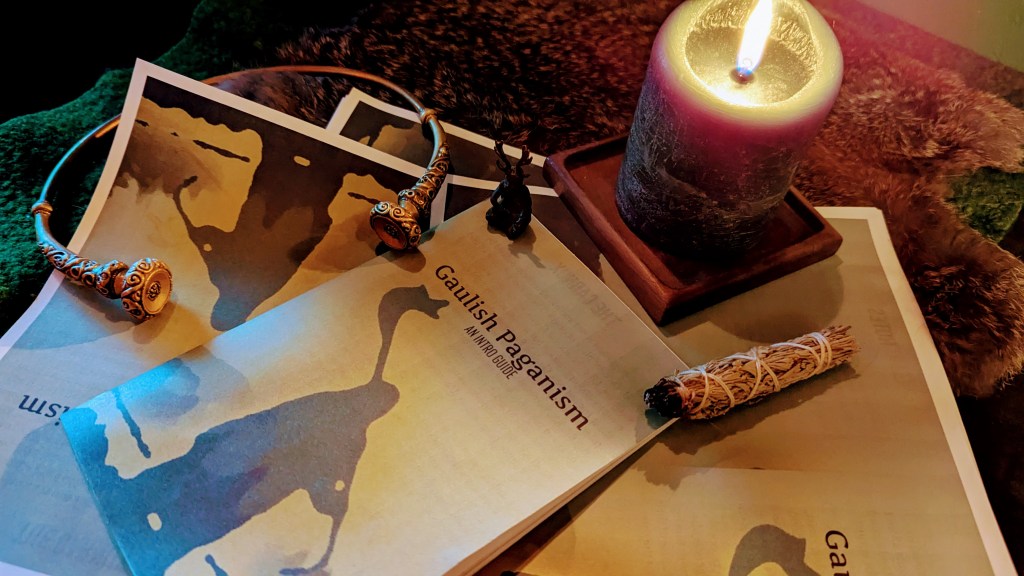




 Gaulish Paganism