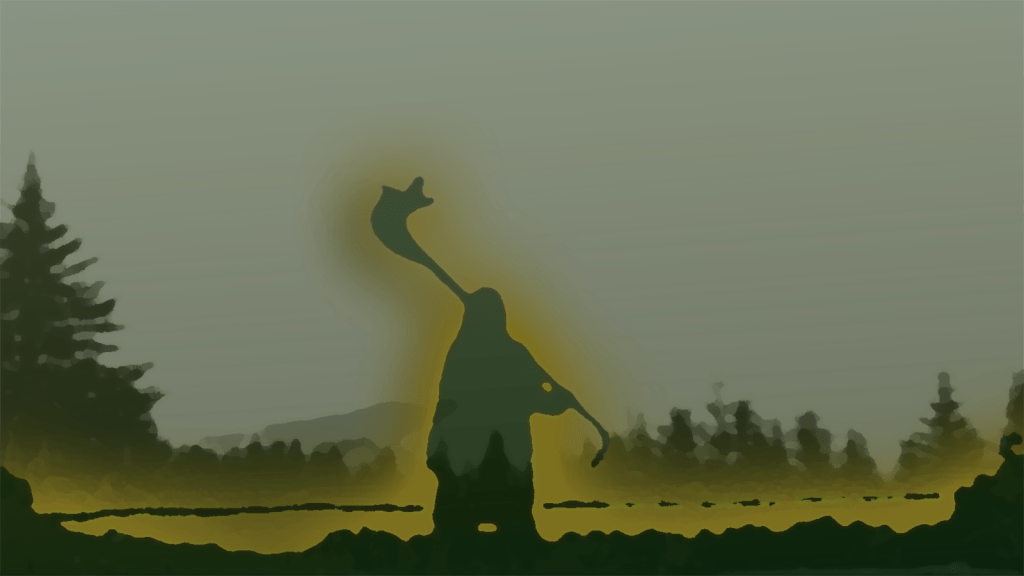
He was old, weighed down by years it seemed, with dark, wrinkled skin stretched like leather across his face and arms. His hair was as white as the peaks of the Alps – or what little hair he had left, that is. Some thought his appearance meant he was one of the oldest of the Gods. But, in truth, he wasn’t. Others were older and some still younger.
He was Ogmios.
Not long after he awoke, Ogmios was walking through the Three Worlds. As he wandered, an idea took form in his mind.
He came across Aisus and asked him if he could have a small cut branch of Drus. Aisus agreed. He next came across Carnonos performing a sacrifice and asked him if he could have the entrails of the bull. Carnonos agreed. Finally, he came to Litauiā and asked her for an empty tortoise shell. Litauiā agreed although it took her a while to find one.
Ogmios then sat down and began to construct what he had in mind, chanting words of power as he did so. He took the branch of Drus and cut it into three pieces and formed a frame out of it. He attached the tortoise shell to the base and then attached strings of the entrails to the tortoise shell and the top of the frame.
He examined his creation to make sure everything was right. “crottā,” he said, naming the instrument.
When he was done, he began to pluck the strings. Sounds came forth but they were a cacophony of distorted noise and not the beautiful sound he thought there would be.
Ogmios laid the device down on the ground and contemplated what could be wrong, what could be preventing him from creating that which he desired.
And then he realized. He had the instrument to do it, but, more importantly, he also needed the magic to make it happen.
Ogmios waved his hands over the instrument. As he did so, a white fire emerged from his fingertips. It grew and grew until it surrounded and enveloped him.
“Auenā Srourā,” he whispered as he lowered his hands and picked up the instrument again. “dīcoriūmi medesue brictiā touiā.” He then began to pluck the strings again. Harmonious and beautiful sounds arose such as the world had never heard before. Ogmios played and played, allowing Auenā Srourā to flow through him.
As he played, the other Gods were drawn to his music. Each of them arrived in turn and sat down to listen. Once they were all there, Ogmios then added words to his music, singing of things the Gods knew and of things they didn’t know. It seemed as if he sang for days, never stopping until finally he felt his song come to an end and he stopped.
He opened his eyes and noticed for the first time that the other Gods were there listening to him. They stared at him, enthralled by what they had heard.
All of the Gods told Ogmios that, as they listened to his song, it seemed as if chains bound their ears to his sweet tongue, beautiful chains of amber and gold to match the lovely words which took flight in his song.
Afterwards, the Gods would hold feasts and Ogmios would play his crottā and sing his songs, entertaining the other Gods. Often he sang songs about the deeds of men and women, informing the Gods of what transpired. Usually, his songs were of praise and glory. But, sometimes, his songs were of shame and obloquy.
But no matter what he sang, his words were always well-crafted and full of eloquence, his winged words that gave flight to his songs.
Over time, those first small sparks of Auenā Srourā grew and grew until they encompassed all Three Worlds, joining with the sparks of others.




 Gaulish Paganism
Leave a comment